
How Long Does a Marriage Green Card Take in 2026? A Timeline for Michigan Applicants
Marriage green card timelines in 2026: adjustment of status, consular processing, work permits, interviews, and key delays for Michigan applicants.

If you are married to a U.S. citizen or green card holder, one of the first questions you probably have is simple: how long will this take? The honest answer is that it depends on your path. A marriage-based green card can take anywhere from under a year to two years or more, and the single biggest factor is whether your spouse is a U.S. citizen or a lawful permanent resident, and whether you are already in the United States or applying from abroad. This guide walks through each path as it stands in 2026 so you know what to expect before you file.
Timeline at a glance
Table dated October 13, 2026. These are the general ranges discussed in this guide, not official USCIS or State Department figures. Use the official source in each row to see current times for your form and office.
| Route and stage | Estimate in this guide | Check current times |
|---|---|---|
| Spouse of a U.S. citizen, in the U.S. (Forms I-130 and I-485 filed together) | About 10 to 16 months, filing to approval | USCIS processing times: select Form I-485, family-based, and the Detroit field office |
| Work permit while the I-485 is pending (Form I-765, category (c)(9)) | Often several months after filing | USCIS processing times: select Form I-765 and the office on your receipt notice |
| Spouse of a U.S. citizen, abroad (I-130, then National Visa Center, then embassy) | Roughly 12 to 18 months or more | USCIS processing times for Form I-130, then NVC timeframes and immigrant visa wait times for your embassy |
| Spouse of a green card holder (F2A category) | Depends on visa availability | Visa Bulletin: F2A row for your country |
The two paths to a marriage green card
Almost every marriage-based case follows one of two routes:
- Adjustment of status — used when the spouse seeking the green card is already in the United States after a lawful entry.
- Consular processing — used when the spouse lives outside the United States and will finish the case at a U.S. embassy or consulate in their home country.
Both routes end with a green card, but the steps, the timing, and the agencies involved are different.
If you are married to a U.S. citizen and already in the U.S.
This is usually the fastest route. Spouses of U.S. citizens are immediate relatives, which means there is no annual cap and no waiting line for a visa to become available. In most cases you can file the family petition and the green card application together at the same time. The core forms in this path are:
- Form I-130 — the petition that establishes the marriage relationship.
- Form I-485 — the application to register permanent residence (the green card itself).
From filing to approval, this commonly takes somewhere in the range of about ten to sixteen months, though the exact time depends heavily on which USCIS field office handles your interview. Cases for Metro Detroit residents are typically processed through the USCIS Detroit field office, and local interview scheduling can move that timeline up or down. You can confirm current office details on the USCIS field office directory. You can check current estimates anytime with the official USCIS processing times tool. You can also read more about how we handle these cases on our family and marriage immigration page.
What you can do while you wait
While your application is pending, you do not have to simply wait empty-handed. You can usually apply for two important benefits at the same time you file:
- Form I-765 — a work permit (Employment Authorization Document) so you can work legally in the U.S. long before the green card is approved.
- Form I-131 — advance parole, which is permission to travel internationally and return while your case is still open.
These are often filed together with the green card application and, as of 2026, often arrive several months after filing. Applying for a work permit is not the same as permission to work: unless you already have work authorization, do not start work until USCIS approves the I-765 and you receive the card. These benefits are for applicants adjusting status inside the U.S.; spouses abroad complete their case through a consulate instead.
If your spouse lives abroad
Here the case starts the same way, with the U.S. citizen spouse filing the I-130 petition. Once USCIS approves it, the case moves to the National Visa Center for document review and fee payment, and then to the U.S. embassy or consulate in your country for an interview. Start to finish, consular cases for spouses of citizens often run in the range of roughly twelve to eighteen months or more, with embassy interview availability in your specific country being a major variable.
If you are married to a green card holder
Spouses of lawful permanent residents fall into the “F2A” preference category. Unlike immediate relatives, this category is subject to visa availability, which is published each month in the State Department’s Visa Bulletin. In some periods F2A has been “current,” meaning little to no extra wait, but that can change. One important note: if your spouse becomes a U.S. citizen while your case is pending, you can usually upgrade to the faster immediate-relative path.
Conditional vs. ten-year green cards
One detail surprises many couples: if you have been married less than two years when your green card is approved, you receive a conditional green card valid for only two years rather than the standard ten. To keep your status, you must file Form I-751 to remove those conditions in the 90 days before it expires, together with evidence that your marriage is genuine. It is not a second application from scratch, but it is a required step you should plan for.
What slows a case down
Most delays come from a short list of avoidable issues:
- Incomplete or inconsistent forms, which can trigger a Request for Evidence and add months.
- Thin documentation that the marriage is genuine.
- Missing tax or financial records for the required Affidavit of Support (Form I-864).
- Scheduling backlogs at a particular field office or embassy.
- Routine background checks.
How to keep your timeline as short as possible
Much of the timeline is within your control. The strongest cases tend to:
- File accurate, complete forms the first time.
- Include strong proof of a real marriage — joint finances, a shared lease or mortgage, photos over time, and insurance documents.
- Provide a complete Affidavit of Support with the required income documentation.
- Respond quickly and thoroughly to any USCIS or consulate request.
Helpful official resources
These official government pages are the most reliable places to confirm current requirements, fees, and timelines:
- USCIS — Family of U.S. citizens
- USCIS forms: I-130, I-485, I-765, I-131, I-864, I-751
- USCIS case processing times
- State Department Visa Bulletin
- USCIS field offices
Help for Metro Detroit families
For families across Metro Detroit, Oakland County, Wayne County, and the surrounding communities, Mann Law Group has guided couples through marriage-based green cards for more than four decades. We help you choose the right path, prepare a complete and well-documented case, and prepare for your interview, whether at the Detroit field office or a consulate abroad. If you would like a realistic timeline for your situation, you can request a consultation.
Frequently asked questions
How long does a marriage green card take in 2026?
Can I work while my marriage green card is pending?
What is the difference between a conditional and a ten-year green card?
Related articles
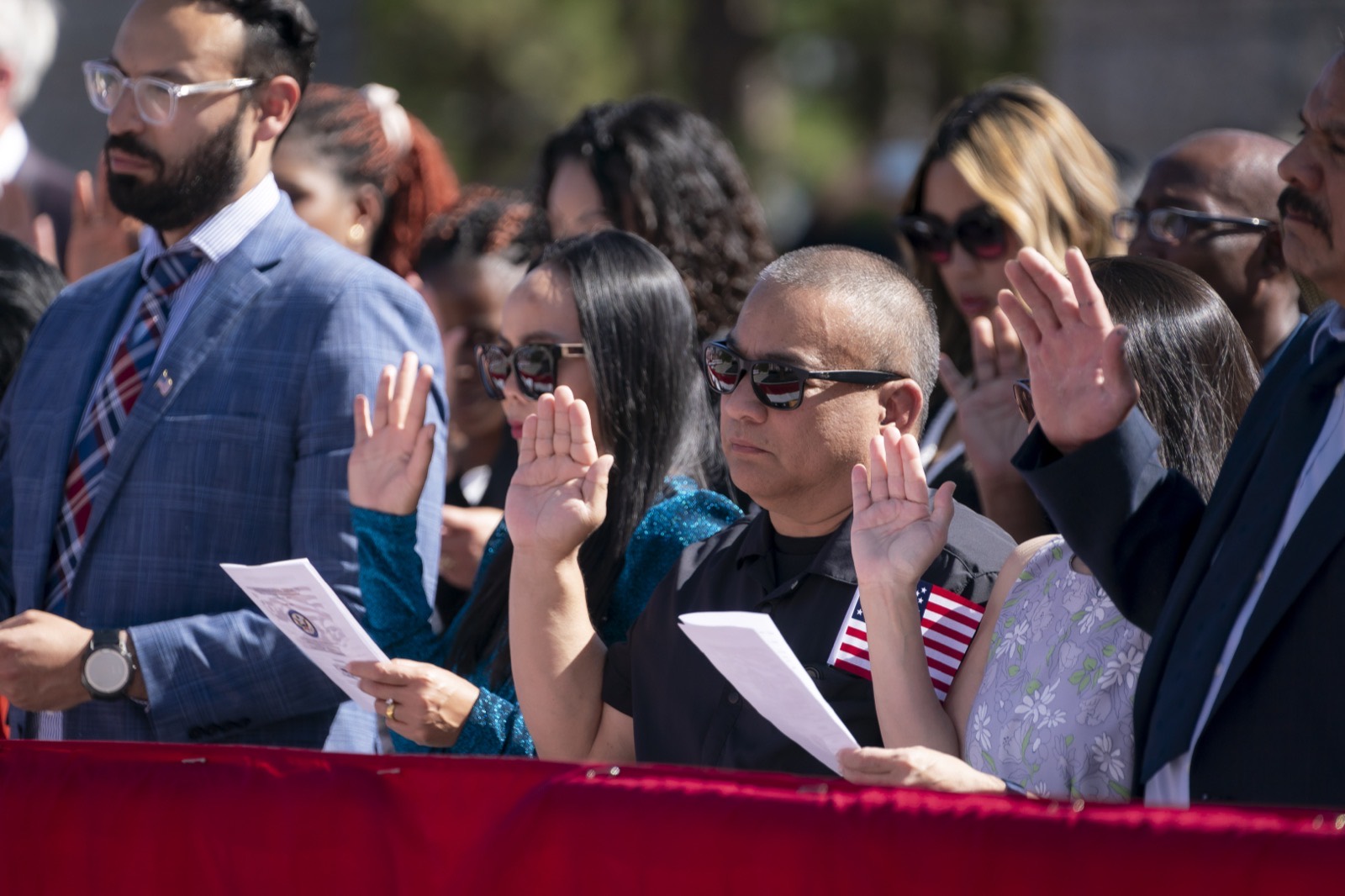
Which Civics Test Will You Take? The 2025 Test, the 2008 Test, and the October 20 Cutoff
Read article ->
The I-601A Provisional Waiver: What It Does and Who Qualifies in 2026
Read article ->