Which Civics Test Will You Take? The 2025 Test, the 2008 Test, and the October 20 Cutoff
USCIS is running two naturalization civics tests at the same time. Your N-400 filing date decides which one you get, what the 2025 test requires, and what happens if you fail.
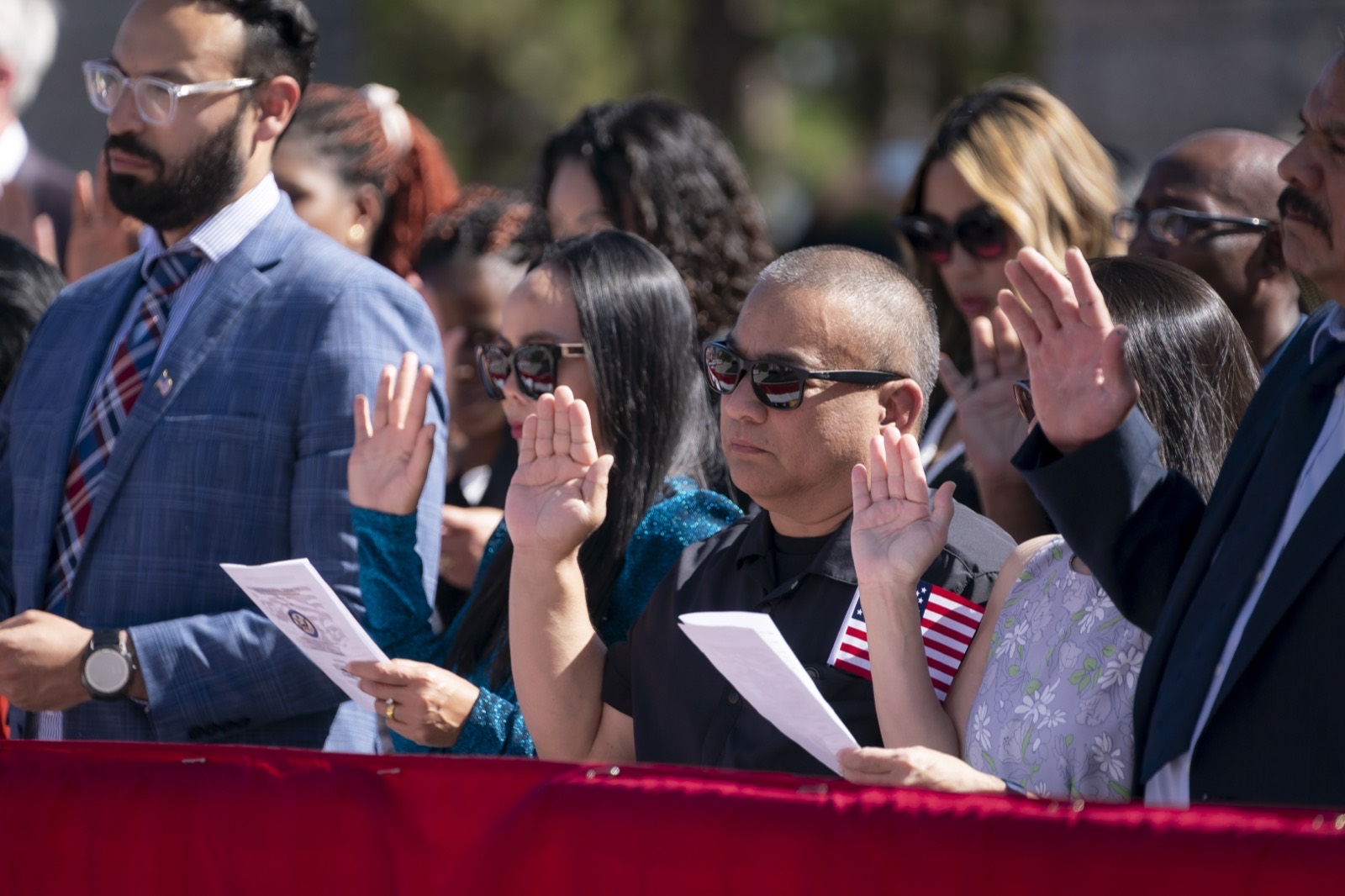
If you are preparing for a naturalization interview right now, you may have noticed that people give you conflicting answers about the civics test. One friend studied 100 questions and was asked 10. A cousin who filed later is studying 128 and expects 20. Neither of them is wrong.
USCIS is administering two different civics tests at the same time, and which one you get has nothing to do with the year of your interview. It is set by the date you filed.
Why this is confusing in 2026
The test is named for the year USCIS adopted it, not the year you sit for it. That naming is the source of most of the confusion.
Naturalization cases take months to work through the queue, so a filing-date rule from October 2025 is still sorting applicants well into 2026 and beyond. Someone who filed in the summer of 2025 and is interviewing now takes the older 2008 test. Their neighbor who filed this spring takes the 2025 test. Both are current applicants. Both are being told different things by the same agency, correctly.
For anyone filing today, there is no ambiguity at all: you take the 2025 test.
Find your filing date before you study anything
The controlling date is when USCIS received your Form N-400.
Where to find it
- Your Form I-797C receipt notice shows a Received Date. That is the date USCIS is using.
- If you filed online, the received date appears in your USCIS online account with the case receipt number.
- If you cannot locate either, do not guess from memory of when you mailed it or clicked submit.
This matters because studying the wrong bank is a real and avoidable waste. The 2008 and 2025 question banks overlap heavily but are not the same, and the 2025 bank is 28 questions longer.
The 2025 test in numbers
The civics portion is an oral test. The officer asks questions out loud during your interview and you answer out loud.
- The bank is 128 questions, published by USCIS as the 128 Civics Questions and Answers (M-1778).
- The officer asks up to 20 questions from that bank.
- You must answer 12 correctly to pass.
- You fail if you answer 9 incorrectly.
- The officer stops as soon as you hit 12 correct or 9 incorrect, so many interviews end before all 20 questions are asked.
That last point surprises people. Reaching 12 correct answers early ends the civics test on the spot. It is not a bad sign when the officer stops.
The 2008 test, for applicants still on it
If you filed before October 20, 2025, nothing about your test changed while you waited:
- The bank is 100 questions.
- The officer asks up to 10 questions.
- You must answer 6 correctly to pass.
- You fail if you answer 5 incorrectly.
Study the 100 Civics Questions and Answers, not the 128-question list. Being over-prepared on the wrong bank is still being prepared on the wrong bank.
The English test is a separate requirement
The civics test gets the attention, but it is only half of the testing requirement. The English portion has three parts, and USCIS scores them separately:
- Speaking. The officer evaluates your ability to speak and understand English through the eligibility questions they ask you about your N-400. There is no separate speaking exercise.
- Reading. You read one sentence out of three correctly, out loud.
- Writing. You write one sentence out of three correctly.
You are given three chances at each of the reading and writing tasks, and one correct sentence is enough. USCIS publishes the official vocabulary lists that the sentences are drawn from, which is worth using, because the vocabulary is finite and known in advance.
Exemptions and special consideration
Not every applicant has to take both tests in English.
The 50/20 and 55/15 English exemptions. If you are 50 or older and have lived in the United States as a lawful permanent resident for at least 20 years, or 55 or older with at least 15 years as a permanent resident, you are exempt from the English requirement. You still take the civics test, but you may take it in the language of your choice with an interpreter.
The 65/20 special consideration. If you are 65 or older and have been a lawful permanent resident for 20 years or more, USCIS administers a shortened civics test drawn from a specially marked set of 20 questions, and asks 10 of them. The qualifying questions are marked with an asterisk in the official question lists, so you study only those 20.
The medical disability exception. Form N-648, completed by a licensed medical professional, can excuse the English and civics requirements entirely for an applicant whose physical or developmental disability or mental impairment prevents them from meeting those requirements. This is a medical determination with its own evidentiary standards, and a poorly prepared N-648 is a common reason these requests fail.
What happens if you fail
Failing a portion at your first interview does not end your application.
The re-examination
- You are tested at the initial examination. The officer administers the English and civics portions during your N-400 interview.
- If you fail a portion, USCIS reschedules you. The second examination is scheduled between 60 and 90 days after the first.
- You are retested only on what you failed. Passing the civics test and failing the writing test means you retake the writing test, not everything.
- Two opportunities is the limit. Failing again at the second examination means the N-400 is denied, and reapplying means a new application and a new fee.
Sixty to ninety days is a meaningful amount of study time. Applicants who treat the second examination as a real second chance very often pass it.
What it costs and which form edition to use
The filing fee for Form N-400 is $760 when you file on paper and $710 when you file online. USCIS also offers a reduced fee and a full fee waiver for applicants who qualify based on household income or receipt of certain benefits; the current eligibility rules and amounts are on the USCIS fee schedule. Fees change, so confirm the figure before you send anything rather than relying on any article, including this one.
The current form edition is dated 01/20/25. USCIS rejects filings that mix pages from different form editions, so download a fresh copy from the Form N-400 page rather than reusing a saved PDF.
Study from the official materials
This is a subject with an unusual amount of outdated material circulating, much of it written before October 2025 and never updated. Some of it is confidently wrong about the number of questions.
Use the USCIS sources directly:
- 128 Civics Questions and Answers (M-1778) for the 2025 test
- 100 Civics Questions and Answers for the 2008 test
- One Nation, One People, the official 2025 study guide and textbook
- The reading and writing vocabulary lists for the English portion
- The Civics Test Updates page for answers that change with elections and appointments
If a study app or worksheet does not say which test it covers, that by itself tells you something about how carefully it was made.
If you are in Michigan
The test itself is federal and identical everywhere. What is local is where you sit for it.
Naturalization is the one immigration process where a Michigan applicant reliably appears in person close to home. Your interview and civics test are scheduled at the USCIS Detroit Field Office, and your interview notice states the exact office, date, and time. Applicants who pass are then scheduled for an oath ceremony, which is the moment citizenship actually takes effect.
The test is also rarely what decides a naturalization case. What decides these cases is usually the years before the application: continuous residence, physical presence, tax filings, and anything in a criminal record. An applicant who studies hard and files with an unexamined eligibility problem has prepared for the wrong part.
If you are not yet a permanent resident, naturalization is further down the road, and our guide to how long a marriage green card takes covers the stage that comes first. You can also read more about green cards generally, or about how we work with applicants throughout Michigan.
Frequently asked questions
How do I know whether I take the 2025 or the 2008 civics test?
How many questions are on the 2025 naturalization civics test?
What happens if I fail the civics or English test?
Do I have to take the test in English?
Is the 2025 civics test harder than the old one?
Related articles

What Happens at a Detroit Immigration Court Hearing — and How to Prepare
Read article ->
How Long Does a Marriage Green Card Take in 2026? A Timeline for Michigan Applicants
Read article ->